Table of Contents
Begin by developing a warm and welcoming setting to put household members at simplicity. Collaborate with the family to develop the session's goals or subjects to be attended to, based on the family's current requirements and progress.

If problems occur, mediate conversations, helping family participants constructively reveal themselves to determine resolutions. Use aesthetic devices like genograms or family maps to show family members connections, characteristics, and patterns throughout generations.
Accumulate basic market details, family members history, presenting concerns, and objectives. They help you recognize the household's context prior to the session. Guarantee that all needed permission types for therapy, privacy, and release of information are prepared and authorized by each family members participant.
Why Specialized Treatment Matters
Have any kind of details evaluation tools or questionnaires ready to gather information about family members characteristics, communication patterns, or various other pertinent factors. These devices help in recognizing the family members's functioning and assist the session.
Goals should be specific, measurable, possible, appropriate, and time-bound (Wise objectives). Guarantee family members understand the limits of confidentiality.
Approach documentation as an important component of your specialist obligations and pursue precision, confidentiality, and honest compliance in all documents methods. Conducting household therapy sessions requires an equilibrium of expertise, empathy, and structured intervention. By executing effective communication strategies and suitable healing strategies while preserving a supportive environment, you can facilitate purposeful progress and positive change within the family members system.
Processing Difficult Bereavement
Family members therapy is an effective tool for strengthening partnerships and dealing with conflicts within homes. At Yeates Consulting, we have actually seen firsthand how this strategy can change household dynamics and enhance total well-being. The advantages of family members therapy prolong much past the therapy space, influencing everyday interactions and long-term family wellness. In this article, we'll check out the real advantages of household treatment and just how it can aid your family grow.
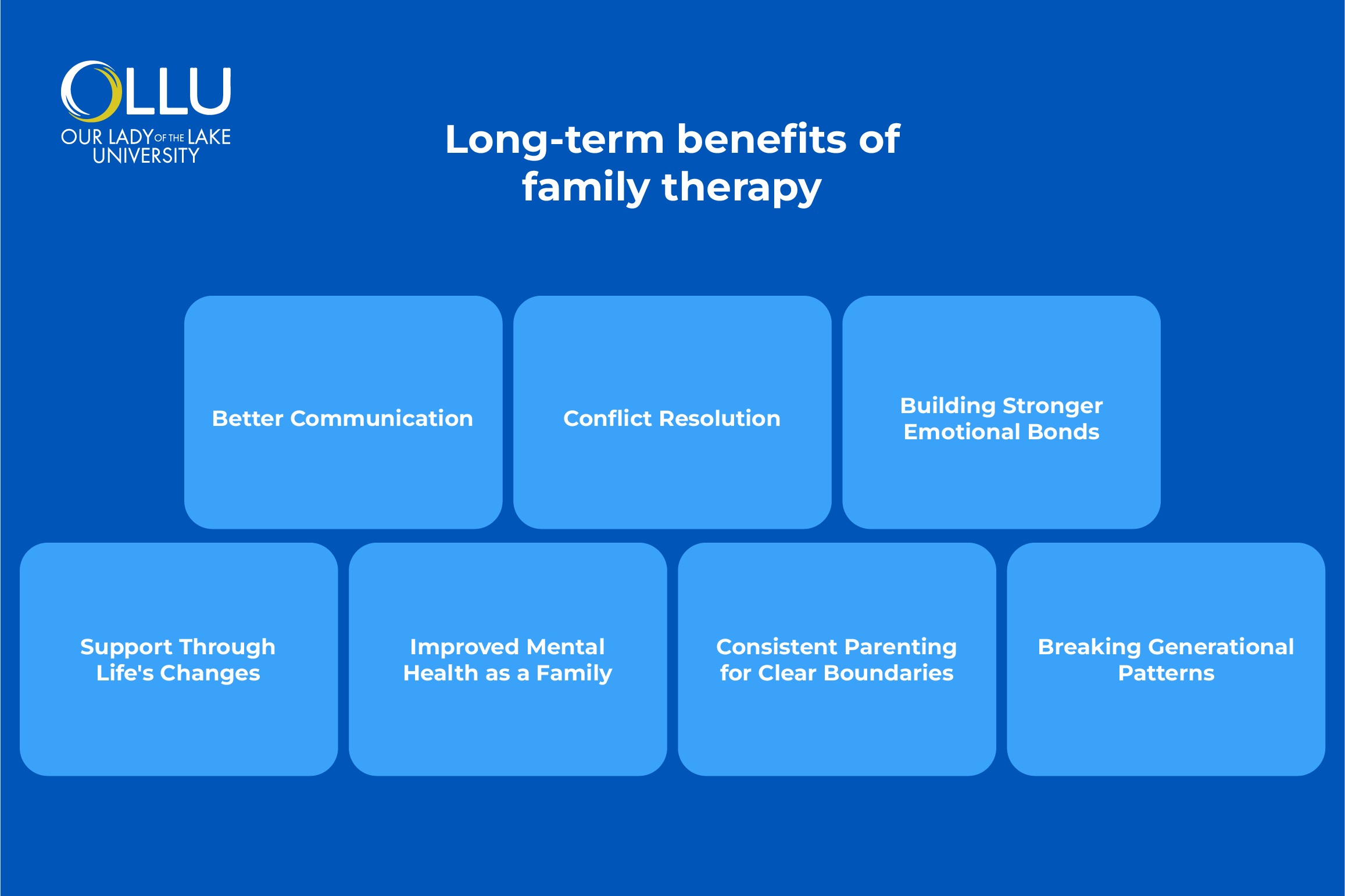
One of the most considerable advantages of family members treatment is improved communication. Many households battle with misconceptions and ineffective arguments. Family members therapy educates specific methods to share feelings and requires more efficiently.
We might make use of cognitive-behavioral therapy aspects to attend to adverse idea patterns or apply structural household therapy methods to boost household organization and communication. We recognize that household requires develop over time.
For families that share interest, we provide the alternative to include faith-based principles into our treatment sessions. This method combines scientific experience with spiritual assistance, providing a comprehensive therapy experience that lines up with your family's ideas and worths. We have actually observed that this integration can be specifically effective for families grappling with mercy problems or seeking significance in challenging scenarios.
Specialized PTSD Treatment
Family members treatment can be highly valuable once all participants are fully entailed in it. Nevertheless, determining the requirement for family therapy can be difficult considering that households tend to stabilize useless patterns over time, making it challenging to determine when they may need professional aid. Listed below, we've listed some signs that a family members might gain from therapy.
Continuous arguing can produce a hazardous atmosphere in your house, adversely influencing the psychological and emotional wellness of every person included. Therapy assists households with identifying triggers and applying conflict-resolution approaches, like energetic and reflective listening, to reduce misconceptions. If member of the family continually have unsettled concerns in their connections, it can lead to emotional detachment.
In these cases, it may be time to think about household treatment as a means to connect this emotional gap. Treatment supplies a risk-free space for them to express their sensations, restore count on, and reconnect emotionally. Among one of the most usual problems in family dynamics is the behavior patterns in children.
These transitions make it challenging for members to adapt to the changes or progress. Family members therapy can be important throughout these times, offering assistance and assisting you through this hard time. When a relative is battling with chemical abuse or psychological health conditions, it can considerably impact the entire family members.
Addressing Dual Diagnosis
In turn, various other relative might not totally recognize or recognize exactly how to supply the proper support. Family therapy provides a room where these challenges can be attended to, and specialists can inform family participants on the nature of these problems, exactly how they impact behavior, and how to provide the appropriate kind of support.
When these emotions are subdued, they can develop obstacles to genuine link and understanding within the family members. In such instances, family treatment provides a secure room to explore these deep-rooted issues, provides clarity, and establishes much healthier communication and coping approaches. Recognizing your household's demands involves exploring kinds of therapy that align with your one-of-a-kind obstacles.
Addressing Concerns About Counseling
On the various other hand, narrative therapy is optimal for households who need to reframe adverse facets of themselves because of all the experiences they had, creating a more positive overview on their past. Solution-focused therapy concentrates on constructing useful services and conquering obstacles given that it has a strength-based method. Psychoeducational therapy sustains, enlightens, and guides households that want to take care of a member through mental health and wellness battles.
Therapy advertises open communication and honesty. However, it is essential to be knowledgeable about oversharing details that are unnecessary to the concerns you intend to attend to. Oversharing can sometimes reduce the development. The only method you can continue to have productive and purposeful sessions is by reviewing what you're sharing and why.

Navigation
Latest Posts
Diverse Therapeutic Styles for EMDR therapy
Understanding Why Compensating Leads in Severe Burnout
Family Violence Survivors